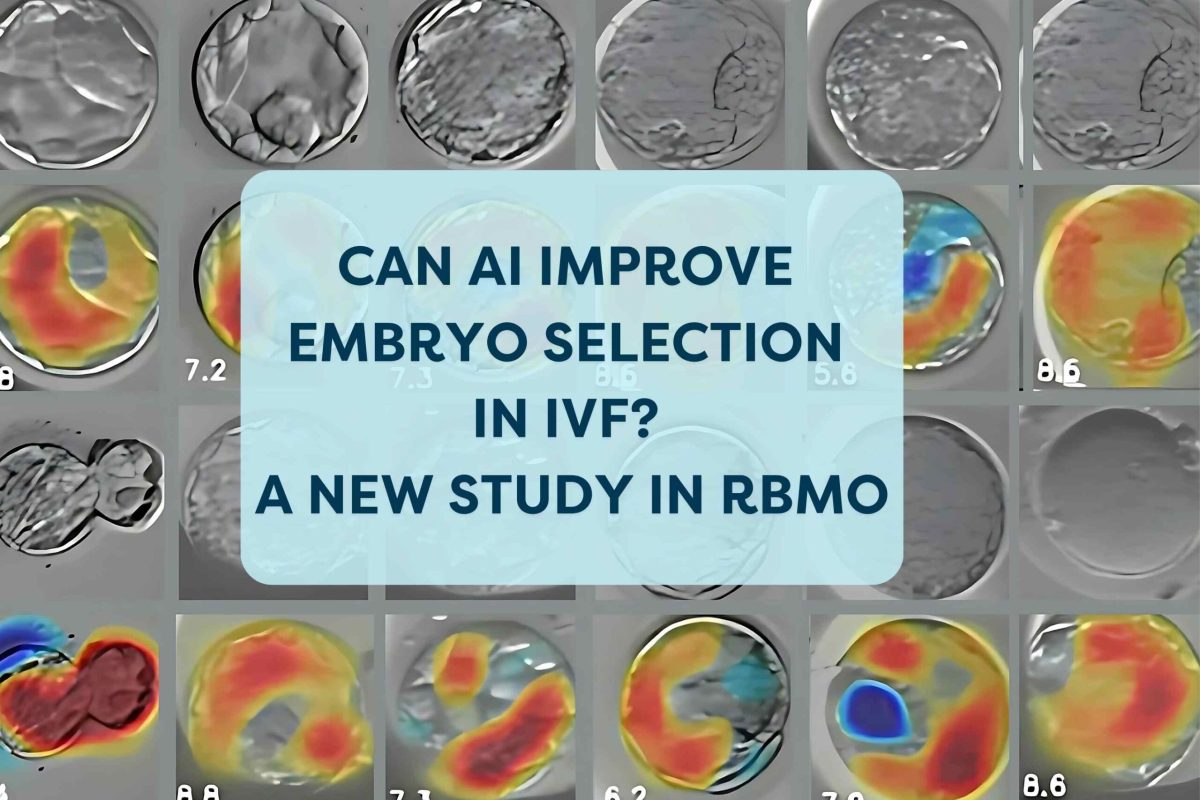
A multicentre IVF study recently published in RBMO called “Evaluating the concordance between AI-based and conventional embryo selection: implications for clinical decision-making” shows AI embryo selection achieved 70.1% accuracy, outperforming most embryologists and supporting AI-assisted embryo assessment in IVF.
Selecting the embryo with the highest chance of implantation remains one of the most important and challenging decisions in IVF. Traditionally, embryologists evaluate embryos based on morphology and experience. However, this process can be subjective and may vary between experts. Recent advances in artificial intelligence offer the possibility of providing standardized, data-driven support for embryo assessment.
In our recent study, “Evaluating the concordance between AI-based and conventional embryo selection: implications for clinical decision-making,” we investigated how an AI embryo selection algorithm compares with that of professional embryologists. The multicentre study involved six IVF clinics across five countries and analyzed 1,681 embryo pairs, each consisting of one embryo that resulted in pregnancy and one that did not.
DISCOVER EMBRYOAID AI – Find out more
The results showed that the AI model achieved an accuracy of 70.1% in identifying the embryo with the successful outcome. This performance exceeded that of most individual embryologists, whose accuracy ranged from 64.2% to 68.9%, with an average of 67.7%. Notably, the AI model performed comparably to the consensus decision of an expert committee formed by 20 embryologists.
These findings highlight the potential of artificial intelligence to support embryologists by providing a consistent, standardized assessment of embryo viability and AI embryo selection. Rather than replacing clinical expertise, AI can function as a decision-support tool, helping clinicians identify embryos with the highest likelihood of pregnancy and live birth while reducing variability in embryo scoring.

Importantly, the study was designed to reflect real clinical decision-making. Instead of predicting outcomes for individual embryos in isolation, the model was evaluated on its ability to rank embryos and select the best candidate for transfer, which mirrors the daily task faced by embryologists in IVF laboratories.
While the results are promising, further research is needed. Prospective multicentre trials will be essential to confirm the clinical impact of AI-assisted embryo selection and to understand how AI can best integrate into IVF workflows.
As reproductive medicine continues to evolve, combining clinical expertise with advanced AI tools may play a key role in improving consistency, transparency, and ultimately patient outcomes in IVF.